Get the exact configuration in writing
A model name is the beginning of a purchase specification. Before ordering a floor scrubber, ask for a quotation that identifies the machine and the configuration being supplied, including batteries, charger, cleaning head and accessories.
This matters when comparing offers. An attractive price may cover a different package from another supplier’s quote. Build your comparison around the same job and the same required equipment.
You can use the Kuarbaa product range to create an initial shortlist. Then work through the following checks with the supplier.
1. Define the floor and the cleaning task
Provide the floor material, finish, approximate cleanable area and normal types of soil. Explain whether the work is routine maintenance or a more demanding cleaning task. Include any sensitive surfaces or restrictions on water and cleaning products.
Request a brush or pad recommendation for that application. Confirm that the proposed detergent and operating method are compatible with both the machine instructions and the floor manufacturer’s care guidance. More aggressive cleaning is not automatically appropriate for a delicate finish.
For an unfamiliar setup, request a demonstration or a test on a representative area. Judge the cleaned floor, not just the appearance of the machine.
2. Separate cleaning width from access width
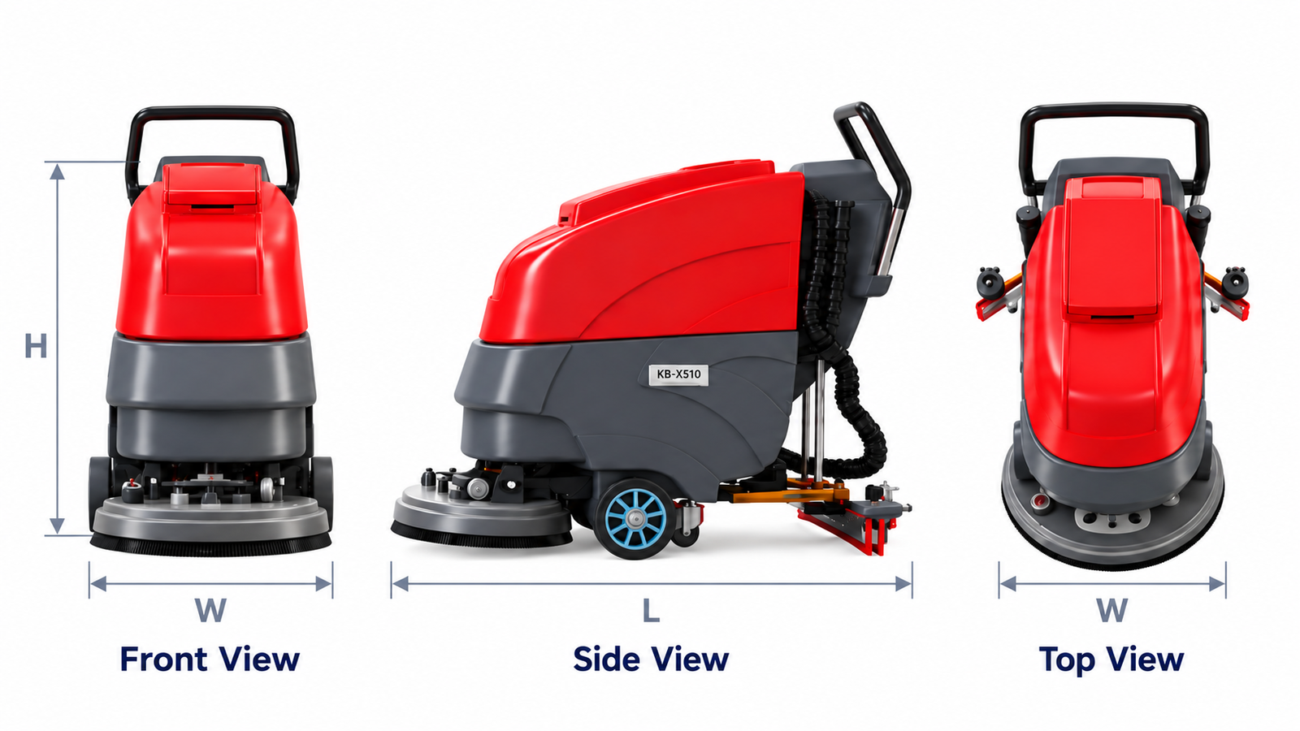
Ask for the cleaning path, squeegee width and overall machine dimensions as separate measurements. Do not use cleaning width alone to decide whether the equipment will fit through a door.
Measure the narrowest point on the complete route, including storage access and passages between work areas. Check turning space at aisle ends, around fixtures and inside lifts.
Request operating weight for the supplied configuration, including batteries and the relevant tank loading. Compare this with lift capacity and any site restrictions. Confirm permitted operating slopes in the manual; transport capability and scrubbing capability may differ.
3. Ask how productivity was calculated
Find out whether the coverage figure is theoretical or an estimate of practical output. Ask which speed, settings and conditions support it.
A useful comparison includes the time spent reaching the work area, maneuvering, filling, draining and caring for the machine afterward. It should also allow for obstacles and any required repeat passes.
Give the supplier your available cleaning window and ask whether its recommendation can reasonably complete the route within it. Keep the assumptions with the quotation. Where possible, confirm them through a timed trial rather than applying a generic productivity percentage.
4. Check both tanks and the service routine
Record solution-tank and recovery-tank capacities separately. Ask how the tanks are filled, emptied and cleaned, and whether the proposed machine can reach your service point conveniently.
Consider the whole routine:
- Is the water source accessible?
- Is there a suitable, permitted wastewater disposal point?
- Can the operator reach the drains, filters and recovery tank for routine care?
- Does the cleaning schedule allow for these stops?
Tank capacity helps describe the machine, but it does not establish how long it will clean on your floor without a refill.
5. Specify the battery and charger package
The quotation should identify battery chemistry, voltage, capacity and quantity where applicable. Confirm whether batteries are included, installed and ready for the required commissioning procedure.
Ask for the expected runtime of that exact package and the conditions behind the estimate. Confirm the charging procedure and time, charger location, input voltage and plug supplied for the destination.
Battery chemistry and charger settings must be compatible. Do not assume that an existing charger can be reused or that a battery with a different specification is an approved substitute. Obtain the supplier’s written guidance before making changes.
Also ask about routine battery care, replacement availability and any site requirements for safe charging.
6. Confirm what arrives with the machine
Request an itemized packing list. Depending on the selected configuration, clarify whether the package includes:
- Brushes, pad drivers and any starter pads
- The complete squeegee assembly and blades
- Batteries and charger
- Keys and any specified setup accessories
- Operating instructions and maintenance information
Ask which consumables you should keep on hand, their part numbers and how replacements are ordered. Confirm whether setup, operator training or technical assistance is included or quoted separately.
7. Review documents and after-sales terms
Request the manual for the exact model and configuration before ordering. Confirm that operators can understand the supplied instructions.
For destination-specific requirements, ask the supplier which compliance documents apply to the actual machine. Review those documents rather than relying on an unsupported logo or a general statement about the brand.
Obtain written warranty terms, including coverage, exclusions, the claims process and responsibility for parts, labor and transport. Ask where service will be provided and how faults are diagnosed. An advertised warranty period alone does not explain what support will cost or how it works.
8. Make delivery responsibilities explicit
Ask for the quoted currency, payment terms, lead time and delivery destination. Confirm whether the price includes freight, insurance, taxes, import duties, customs clearance and final delivery. Do not assume that a product-page price is the total delivered cost.
Check packaging dimensions and weight, unloading requirements, and responsibility for any handling equipment needed on arrival. Agree how transport damage, missing items and acceptance checks will be recorded and reported.
For an international order, have the agreed shipping term and named place written into the quotation or order documents.
Before you approve the order
Keep one final specification covering the machine, configuration, included items, documents, delivery terms and after-sales arrangements. Resolve discrepancies between that specification and the quotation before paying.
To request a comparable offer, contact Kuarbaa with your floor details, access measurements, cleaning schedule and delivery location. A clear brief makes it easier to identify the right configuration and avoid surprises after arrival.

 Cleaning Equipment
 Floor Scrubbers
 Floor Sweepers
 Industrial Vacuum Cleaners
 Autonomous Cleaning Robots
 High-Pressure Washers
 Municipal Cleaning Equipment
 Air & Water Treatment
 Dust Collection Systems
 Industrial Fume Extraction
 Oil-Water Separators
 Wastewater Treatment Systems
 Air Purification Systems
 Foodservice Equipment
 Commercial Cooking Equipment
 Kitchen Exhaust Systems
 Food Display Equipment
 Food Preparation Equipment
 Warewashing Equipment
 Refrigeration
 Commercial Refrigerators
 Commercial Freezers
 Display Refrigeration
 Ultra-Low Temperature Freezers
 Ice Makers
 Cold Storage Equipment
 Material Handling
 Forklifts
 Pallet Trucks
 Stackers
 Lift Tables
 Material Handling Carts
 Warehouse Equipment
 Industrial Machinery
 Packaging Machinery
 Food Processing Machinery
 Workshop Machinery
 Processing Equipment
 Specialized Machinery