Get Free Consultation!
We are ready to answer right now! Sign up for a free consultation.
By submitting this form, I agree to the Terms of Use and Privacy Policy.

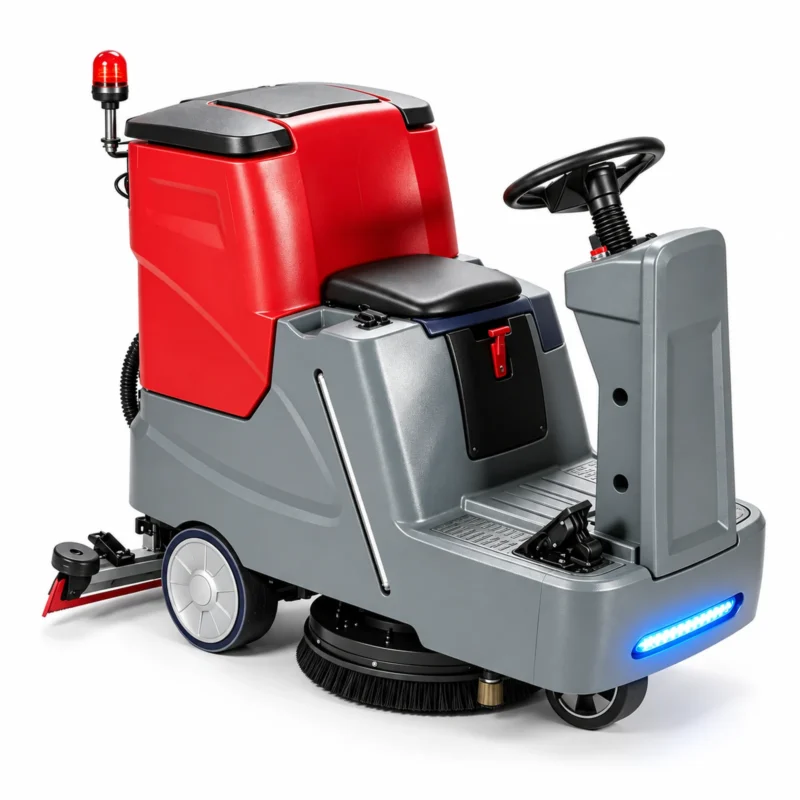
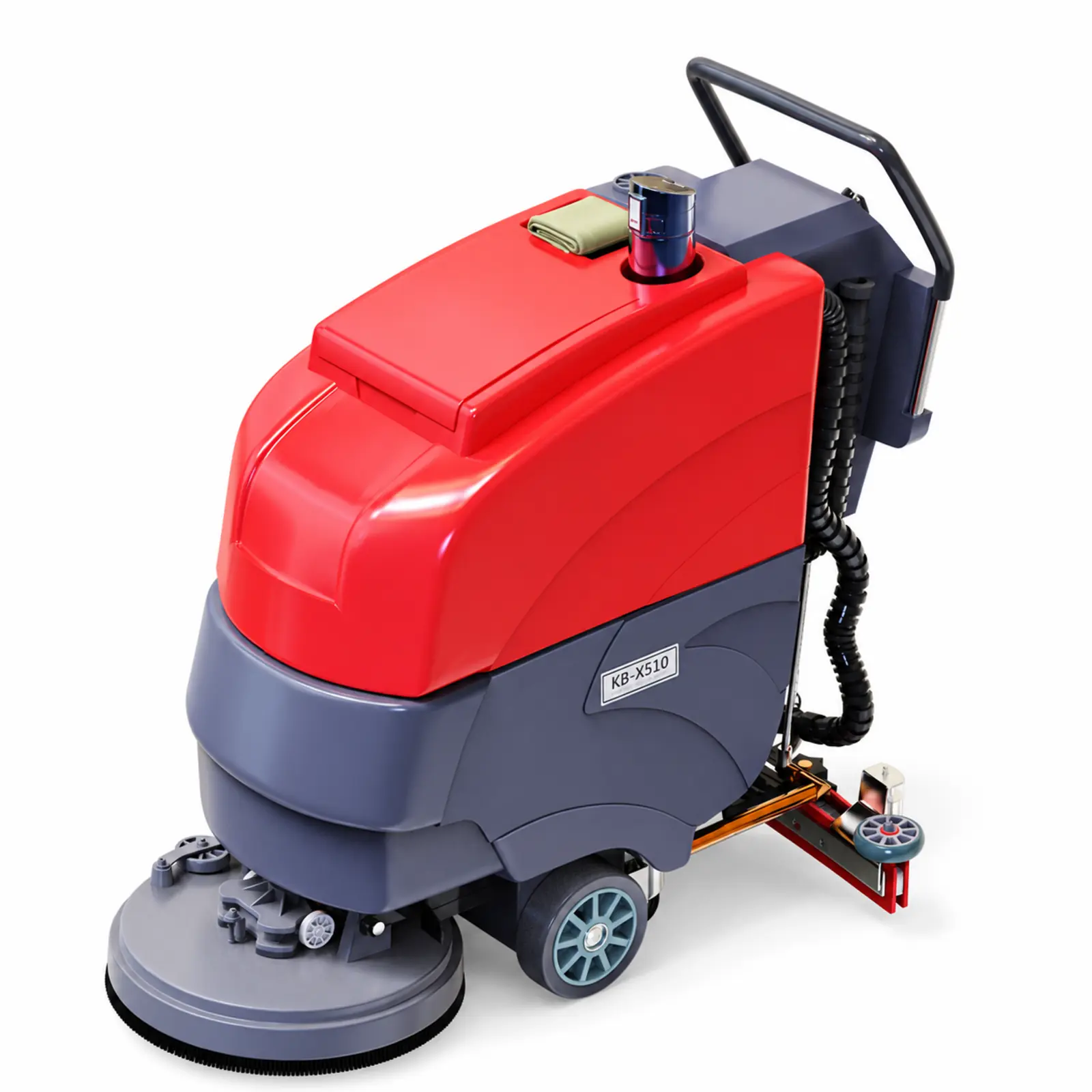
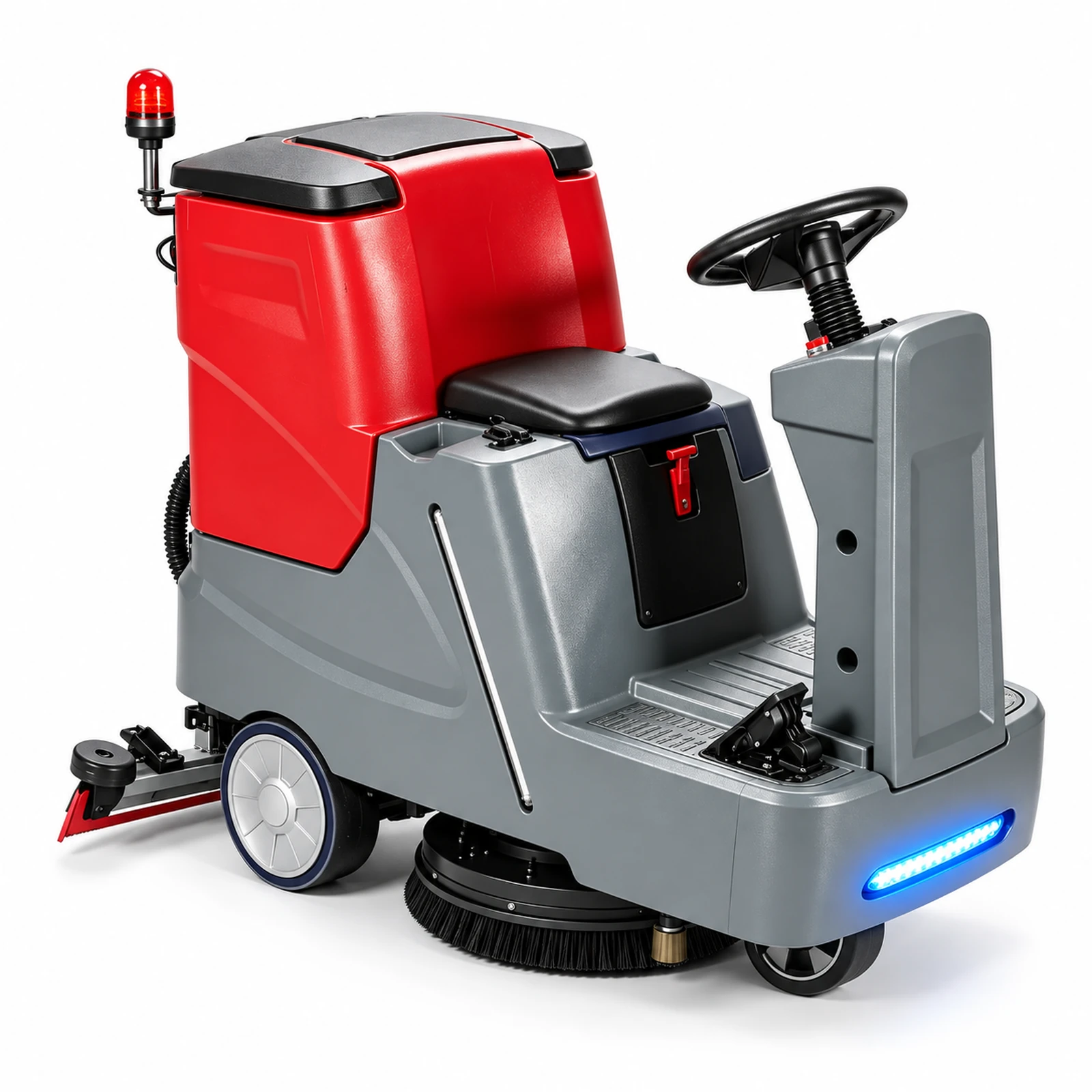
A large floor area does not automatically call for a ride-on scrubber. A smaller site can also be demanding if it must be cleaned within a short window. The right choice depends on how the machine moves through the building and how much useful work it completes between stops.
Begin with a simple route plan. Mark the floors that need machine cleaning, the narrowest entrances, fixed obstacles, turning points and places where people or vehicles interrupt work. Include the route from storage to the cleaning area, plus access to water, drainage and charging.
This gives you a practical brief for comparing machines instead of choosing from floor area alone.
A walk-behind machine deserves a close look when the route includes separate rooms, changing layouts or frequent obstacles. The operator walks behind the machine, so check the space needed for both the equipment and the person guiding it.
Do not assume all walk-behind models handle the same way. Ask whether the selected configuration has powered traction or relies on another form of assistance. Have the intended operator test starting, stopping, turning and repositioning it on a representative floor.
For a shop, workshop or smaller commercial facility, the important question is whether the machine can finish the actual route comfortably within the available time. A compact footprint is valuable only if cleaning performance and tank capacity also suit the job.
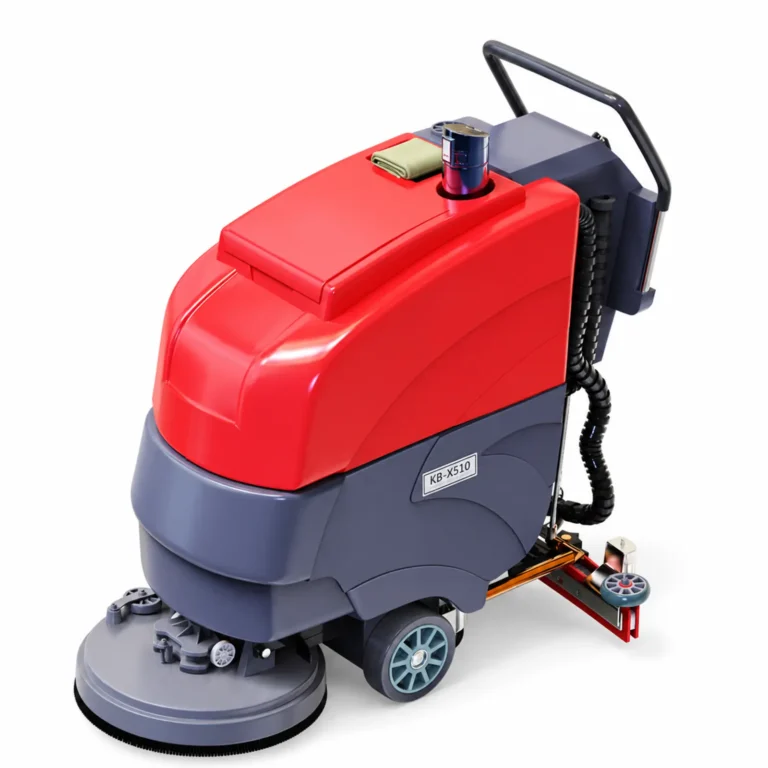
The KB-X510 Walk-Behind Floor Scrubber is a starting point for discussing this format with Kuarbaa. Confirm the offered configuration against your site requirements.
A ride-on machine places the operator on the equipment rather than requiring them to walk the whole route. Consider this format for extended cleaning routes and connected areas where the operator can make productive passes with fewer interruptions.
However, a seat does not guarantee a faster result. Frequent reversing, congested junctions and difficult access can reduce the benefit. Evaluate visibility, access to controls and the space required to turn at the ends of aisles. Plan how pedestrians and cleaning equipment will share the area.
The KB-X780 Ride-On Floor Scrubber provides a ride-on option to review. Request current dimensions and operating limits before deciding whether it fits your route.
Published productivity figures need context. Theoretical coverage describes an idealized rate; an estimated practical figure uses additional assumptions. Neither is a guaranteed completion time for your building.
Ask what the quoted figure includes. Does it account for overlapping passes, turns, water changes and travel between areas? What cleaning speed, floor condition and operating settings were used?
For your own comparison, time a complete trial route. Include preparation, any required debris removal, filling, cleaning, emptying and end-of-use care. Record the area actually cleaned and inspect the result. A machine that needs a second pass may finish later than one with a lower headline coverage figure.
Where a trial is unavailable, ask the supplier to state the assumptions behind its recommendation and identify the uncertainties.
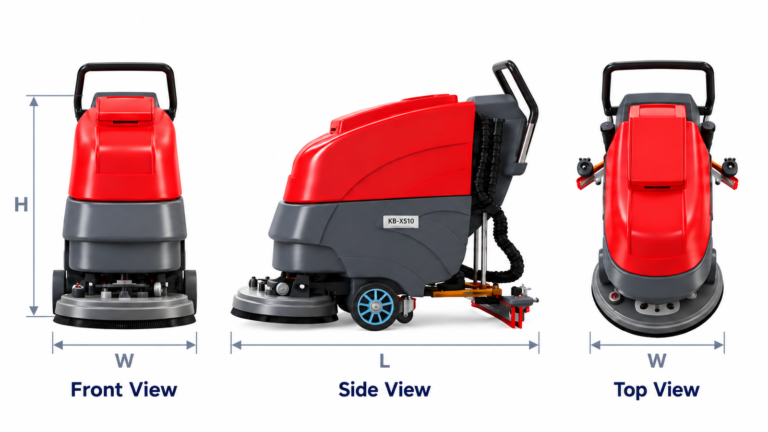
Cleaning width and squeegee width describe different parts of the machine. The cleaning head works on the floor; the squeegee assembly collects dirty water behind it. The full working width may therefore exceed the advertised cleaning path.
Check all of the following:
Do not treat a transport or ramp-climbing limit as approval to scrub on that slope. Follow the selected machine’s manual and site safety requirements.
Solution and recovery tanks serve separate functions. Consider both capacities and how conveniently the operator can fill, drain and clean them. A larger tank may reduce interruptions, but the route to the service area still matters.
Battery runtime must be tied to the actual battery package and operating conditions. Confirm battery chemistry, capacity, charger compatibility and the charging time required by the proposed setup. Ask whether the runtime estimate represents active scrubbing and which settings it assumes.
Your work schedule should leave time for charging and routine care, not just the cleaning pass.
Both formats still need a suitable brush or pad, cleaning solution and operating setup. Describe the floor material, finish, texture and typical soil to the supplier. Check the floor manufacturer’s care instructions alongside the machine manual.
Request a small test on a representative area before committing to an unfamiliar combination. Evaluate soil removal, finish condition and water pickup. Identify any loose debris that must be removed before scrubbing.
Shortlist the machine that fits the route, produces the required cleaning result and completes the work within your schedule. Then compare the quoted package, consumables, maintenance access and support arrangements.
Send your floor details, route measurements and cleaning window to Kuarbaa’s contact team. Ask for a recommendation with the configuration and assumptions stated clearly so you can make a like-for-like decision.
Turn a floor scrubber quotation into a clear purchase specification. Check access, cleaning performance, batteries, accessories, documentation and delivery responsibilities before ordering.
Build a practical end-of-shift routine for tanks, brushes, squeegees and battery checks, with clear limits on what operators should handle.
 Cleaning Equipment
 Floor Scrubbers
 Floor Sweepers
 Industrial Vacuum Cleaners
 Autonomous Cleaning Robots
 High-Pressure Washers
 Municipal Cleaning Equipment
 Air & Water Treatment
 Dust Collection Systems
 Industrial Fume Extraction
 Oil-Water Separators
 Wastewater Treatment Systems
 Air Purification Systems
 Foodservice Equipment
 Commercial Cooking Equipment
 Kitchen Exhaust Systems
 Food Display Equipment
 Food Preparation Equipment
 Warewashing Equipment
 Refrigeration
 Commercial Refrigerators
 Commercial Freezers
 Display Refrigeration
 Ultra-Low Temperature Freezers
 Ice Makers
 Cold Storage Equipment
 Material Handling
 Forklifts
 Pallet Trucks
 Stackers
 Lift Tables
 Material Handling Carts
 Warehouse Equipment
 Industrial Machinery
 Packaging Machinery
 Food Processing Machinery
 Workshop Machinery
 Processing Equipment
 Specialized Machinery